Table of contents
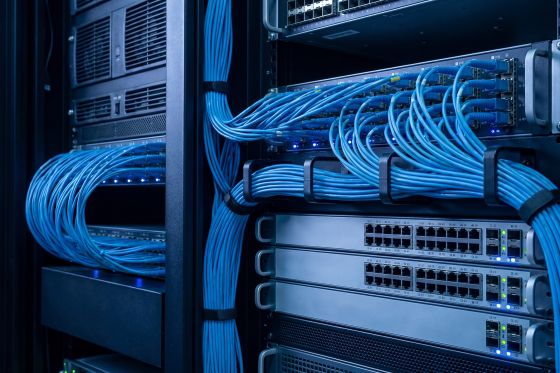
Why cable management in data centres is a safety-critical task
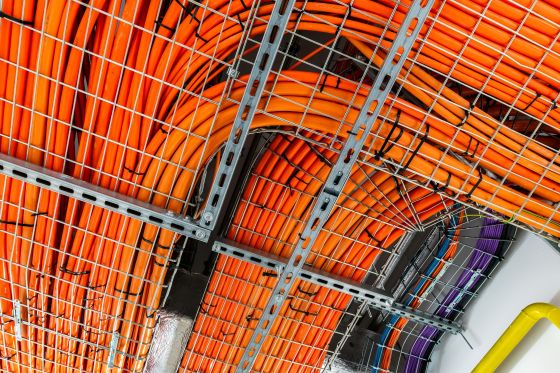
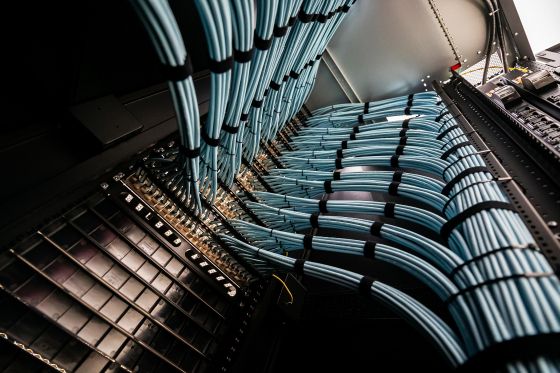
Modern data centres rely on a highly available power and data infrastructure. From power supply and network technology to sensor technology, monitoring and security systems, thousands of cables must be routed securely, clearly and reliably at all times.
Professional cable management ensures that power and data cables are protected, clearly separated and securely fastened. It reduces mechanical stress, supports fire safety concepts and facilitates both installation and maintenance. With increasing power density and growing system complexity, high load-bearing capacity, vibration resistance, defined fire behaviour and long-term durability are becoming essential requirements.
Interested in cable clamps from STAUFF?
Find out more about clamps from our range that are suitable for cable routing or specifically designed for this purpose
Requirements for cable management systems in modern data centres
In today’s data centres, cable routes are predominantly located:
in ceiling areas
along load-bearing structures
within modular rail and profile systems
Cable fastening solutions must not only be mechanically secure, but also integrate seamlessly into modular infrastructure concepts. Adjustments, extensions and retrofits are part of day-to-day operations – cable management systems must support this flexibility on a long-term basis.
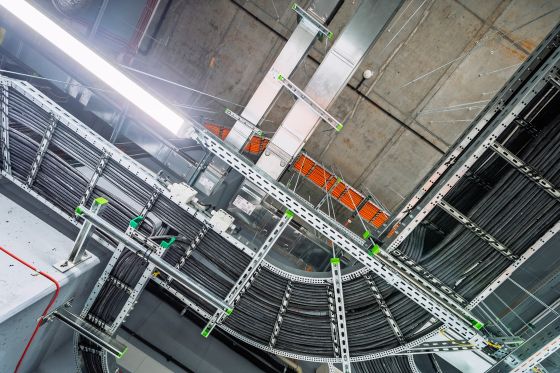
The role of mounting rails and profile systems
Modular mounting rails and profile systems have established themselves as the structural backbone of modern data centres. They are used to route:
Power and data cables
Cooling pipes
other technical supply systems
Their high load-bearing capacity, quick installation and, above all, their flexibility make them ideal for constantly changing data centre environments. To ensure that cable management solutions function reliably in the long term, full compatibility with these profile systems is essential. This is the only way to ensure secure fastening, efficient installation and long-term operational reliability.
Advantages of modular cable management solutions
Modular cable fastening systems make a significant contribution to the operational reliability and cost-effectiveness of data centres. Among other things, they support:
high mechanical stability over long periods
reliable fire performance
reduced assembly and installation times
easy retrofitting and expansion
clear, well-organised cable routing
Thanks to standardised interfaces and robust designs, such systems are suitable for both initial installation and subsequent modifications – a decisive advantage in dynamic data centre environments.
Flame-retardant block clamps for power and data cables
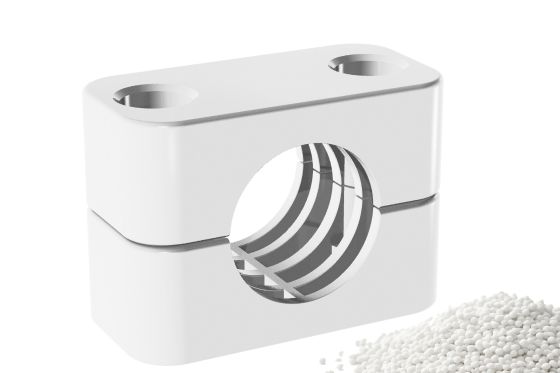
Block clamps are a key element of safe cable management. For electrical power and data cables, STAUFF offers versions made from flame-retardant plastics based on polyamide or polypropylene.
Typical features of these block clamps are:
Highest V0 classification according to UL 94 (self-extinguishing, no burning droplets)
High resistance to temperature, media, UV radiation and environmental influences
Smooth inner surfaces with generously rounded edges to protect the cable insulation
Full compliance with DIN 3015
Wide range of metric and imperial cable diameters
Available in standard, intermediate and heavy-duty series
Corrosion-resistant metal components made of stainless steel or, alternatively, galvanised steel variants with a zinc-nickel coating are available for installation, enabling a wide range of mounting options.
Block clamps for cables in corrugated conduit protection systems
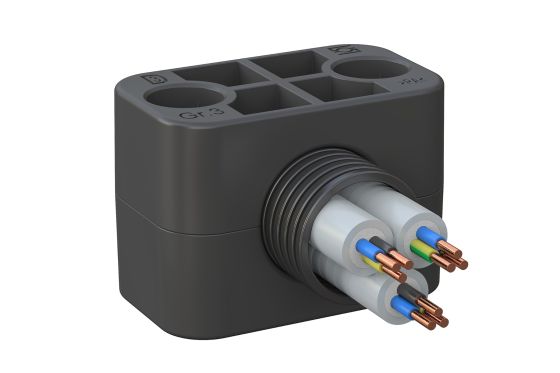
In many areas of data centres, electrical cables are routed through corrugated conduit protection systems. For these applications, block clamps with a single-sided internal rib are available, which reliably prevent the corrugated conduits from slipping.
Additional features include:
special inserts made of thermoplastic elastomer to protect the cables
flame-retardant materials in accordance with UL 94
DIN 3015 compliance
wide range of nominal diameters
flexible installation options
This combination ensures secure fastening, reliable strain relief and long-term protection – even in the presence of vibrations or high cable density.
WPC and PCC cable clamps for high-performance power cabling
For applications in the field of primary power supply for data centres – particularly with large cable cross-sections and heavy cable bundles – special high-performance clamps such as the STAUFF WPC and PCC clamps are also used. These cable fasteners are designed for securing low- and medium-voltage cables and offer a permanently secure, vibration-resistant fix even under high mechanical loads.
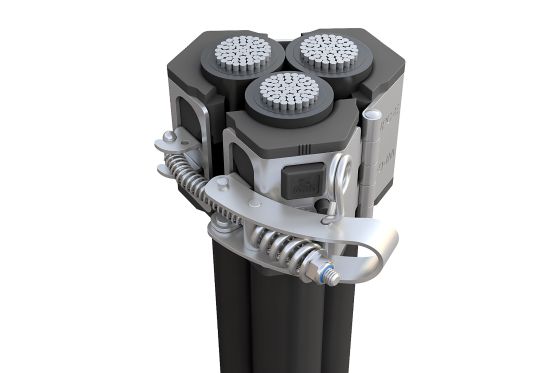
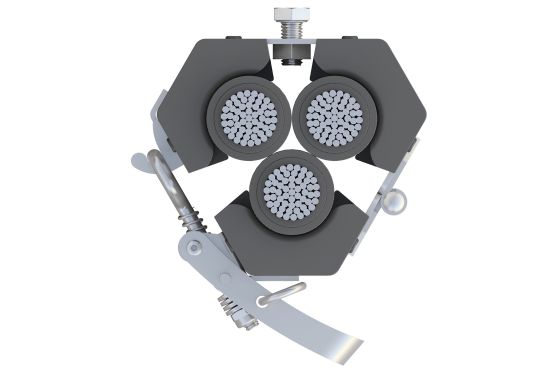
Thanks to their precisely defined clamping force, robust construction and flexible adaptation to different cable diameters, they are particularly suitable for the structured installation of larger power cables in the primary supply area of data centres. At the same time, they enable efficient installation and secure cable routing even with heavy cables and complex installation conditions.
WPC and PCC clamps thus complement traditional cable fastening solutions wherever maximum stability and load-bearing capacity are required – for example, at feed-in points, main distribution boards or for the vertical and horizontal routing of large cable bundles.
Rail-mounted cushion clamps for flexible installations
For applications where quick installation and easy retrofitting are key, rail-mounted Cushion Clamps – simple metal clamps with an elastomer insert – are ideal. They are specifically designed for direct installation in standard profile systems.
Their advantages include:
quick installation without additional Adaptors
easy retrofitting and removal of cables
space-saving design
secure fastening with vibration-damping effect
wide range of cable diameters covered
This makes them particularly suitable for ceiling runs, cable outlets and distribution areas with high demands on flexibility.
Modular cable management as the foundation for scalable data centres
Data centres are subject to constant change. Power densities are rising, layouts are changing and infrastructure is growing. Modular cable management solutions are designed to support these developments in the long term.
The combination of flame-retardant block clamps, variants suitable for corrugated conduits and rail-mounted cushion clamps creates a standardised, future-proof overall system that integrates seamlessly into modern support structures.
The result is safe, organised and durable cable routing that meets both current and future requirements.
FAQs
Why is cable management so important in data centres?
Structured cable management ensures the safe and organised routing of power and data cables. It protects against mechanical damage, supports fire safety concepts and facilitates maintenance and future expansions, which is crucial for operational safety.
What requirements must cable fastenings in data centres meet?
Cable fastenings must offer high load-bearing capacity, vibration resistance, flame-retardant properties and long-term durability. Furthermore, compatibility with modular mounting rails is crucial for flexible adaptations.
Why are mounting rails and profile systems so widely used?
Mounting rails offer high flexibility, quick installation and easy expandability. They enable cable infrastructure to be adapted throughout the entire lifecycle of a data centre.
What are the benefits of flame-retardant block clamps?
Flame-retardant block clamps reduce the risk of fire spread, are self-extinguishing and prevent burning droplets. As a result, they make a significant contribution to compliance with safety requirements in data centres.
When are rail-mounted cushion clamps appropriate?
Cushion clamps are particularly suitable for applications involving frequent adjustments or limited installation space. They enable quick installation and easy retrofitting, whilst also offering vibration-damping properties.

Newsletter Sign-up
Sign up now and never miss another post!